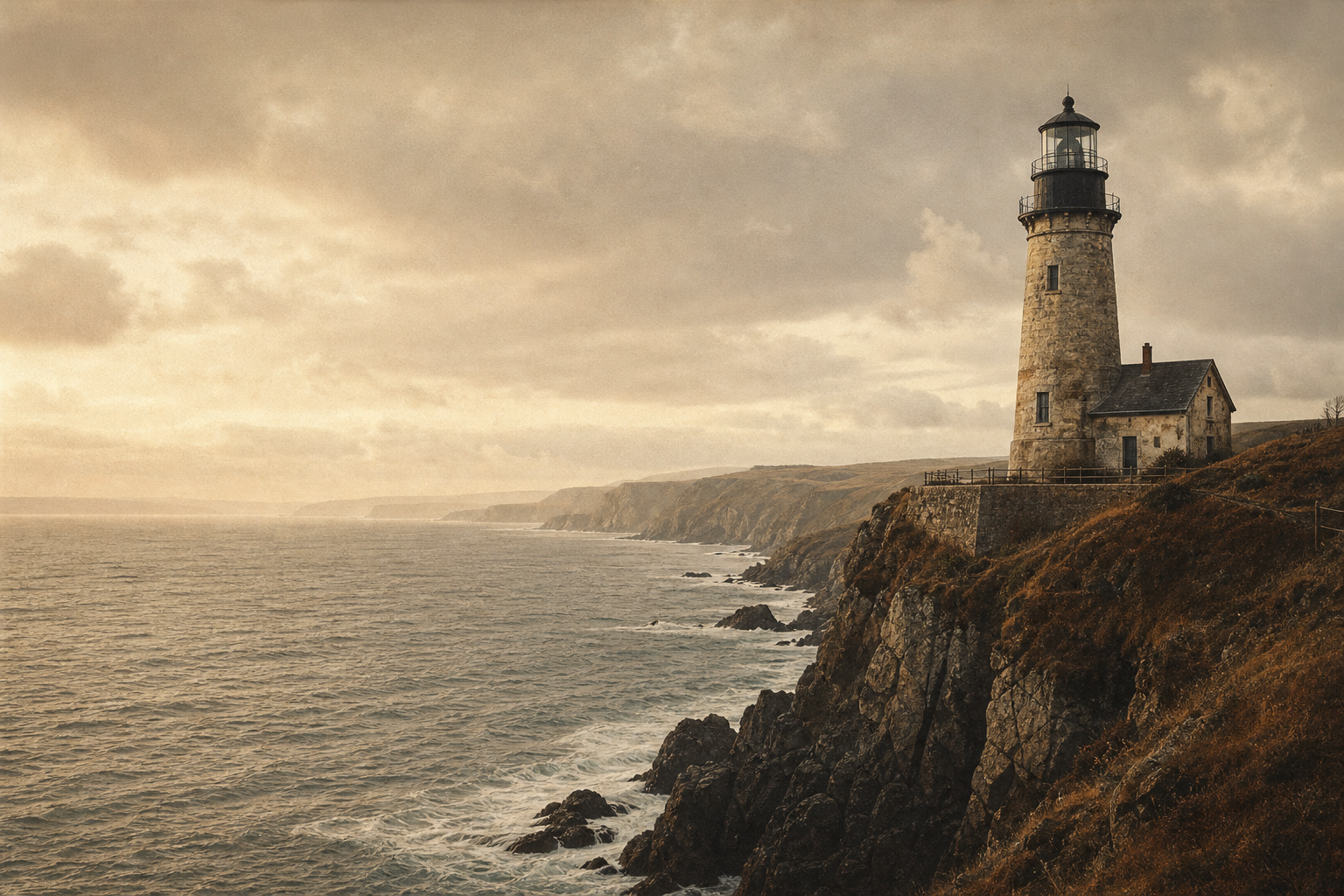
Wide archival-style panorama of a weathered lighthouse on a rugged northern coastline at dusk, with rolling surf, distant headlands, and warm film-like grain

Northern Coast Lighthouse Archive

Guardians of the Northern Coast

Trace how beacon towers, keeper memory, winter storms, and shoreline labor shaped the maritime history of the northern coast.

  • Preserved landmarks
  • Keeper accounts
  • Archive imagery

Coast History

How the lighthouse chain shaped the northern shoreline

Built as practical beacons, these towers became a coastal system that organized safer passage, weather response, and working life across generations.

  1. 1820s–1840s

    First warning lights

    Harbor approaches gained fixed lantern towers so fishing and cargo vessels could identify dangerous reef lines after dusk.

  2. 1850s–1880s

    Network expansion

    A coordinated chain of taller masonry beacons mapped the full coast, allowing captains to triangulate position between headlands.

  3. 1890s–1930s

    Keepers and weather watch

    Keeper stations evolved into local signal hubs, logging storms, relaying warnings, and anchoring shoreline communities through winter seasons.

  4. 1940s–Today

    Preservation era

    As automation reduced staffing, residents and historians preserved surviving towers as public memory sites for navigation and labor history.

Preserved towers

What still stands along the northern coast

From weather-cut headlands to harbor entries, these towers remain the clearest landmarks in the coast's living navigation story.

Preservation note

Most surviving lights now persist through local stewardship, where restoration doubles as a shared record of labor, storms, and shoreline memory.
North Head Reach

Tower

Brackwater Point Light

Granite-footed beacon that guided fishing crews through fogbound spring passages.

Preservation: Lantern housing stabilized and kept active as a heritage signal during seasonal visits.

Harbor Mouth

Tower

Lowwater Quay Light

Compact iron tower tied to pilot routes and dockside cargo traffic in the steam era.

Preservation: Exterior cladding conserved; original access stair retained for guided interpretation days.

Outer Shoals

Tower

Sealrock Beacon

Whitewashed masonry shaft known for winter watch records and storm-season relays.

Preservation: Masonry repointed and viewing perimeter protected to reduce cliff-edge wear.

South Channel

Tower

Dunmere Head Light

Tall coastal sentinel associated with keeper logbooks on tides, birds, and rescue calls.

Preservation: Lens chamber curated as a small civic archive with rotating local-history exhibits.

Keeper stories

Lives behind the lantern glass

Beyond masonry and iron, the towers held routines of weather logs, lamp care, and letters home—continue from preserved structures into lived memory, then trace each site on the map.

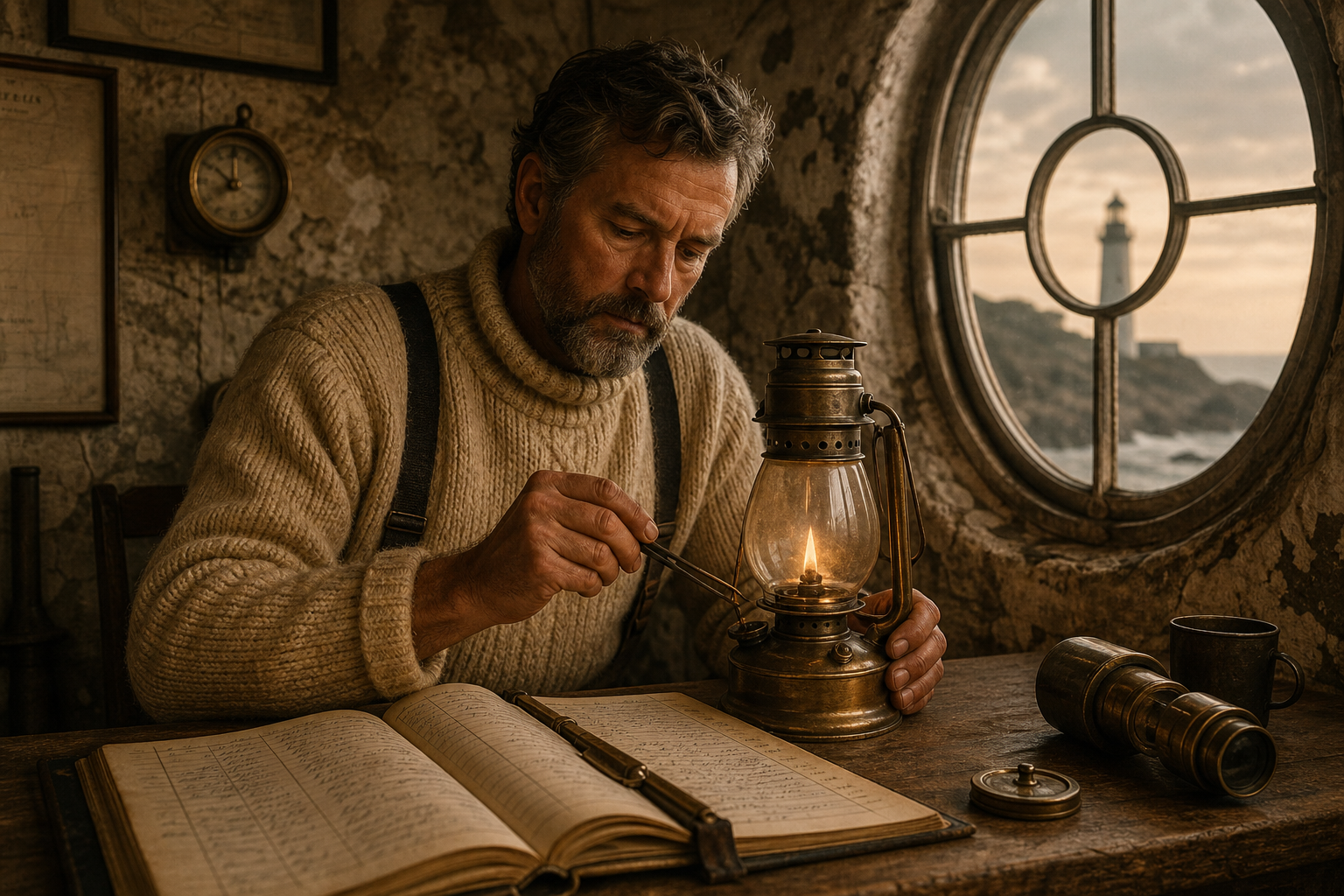
  1. Middle-aged lighthouse keeper in a thick wool sweater trimming a kerosene lantern wick beside a brass logbook in a narrow stone watch room
    Night routine

    Wick, lens, and the midnight ledger

    At North Shoal Light, the evening watch began before dusk with polishing cloth, fuel measure, and a final climb to inspect the Fresnel lens. Each adjustment was entered by hand, line by line, so the next shift inherited a clear record.

    If the flame burned steady, the whole coast seemed to breathe easier.

    Ledger excerpt, winter watch, 1912
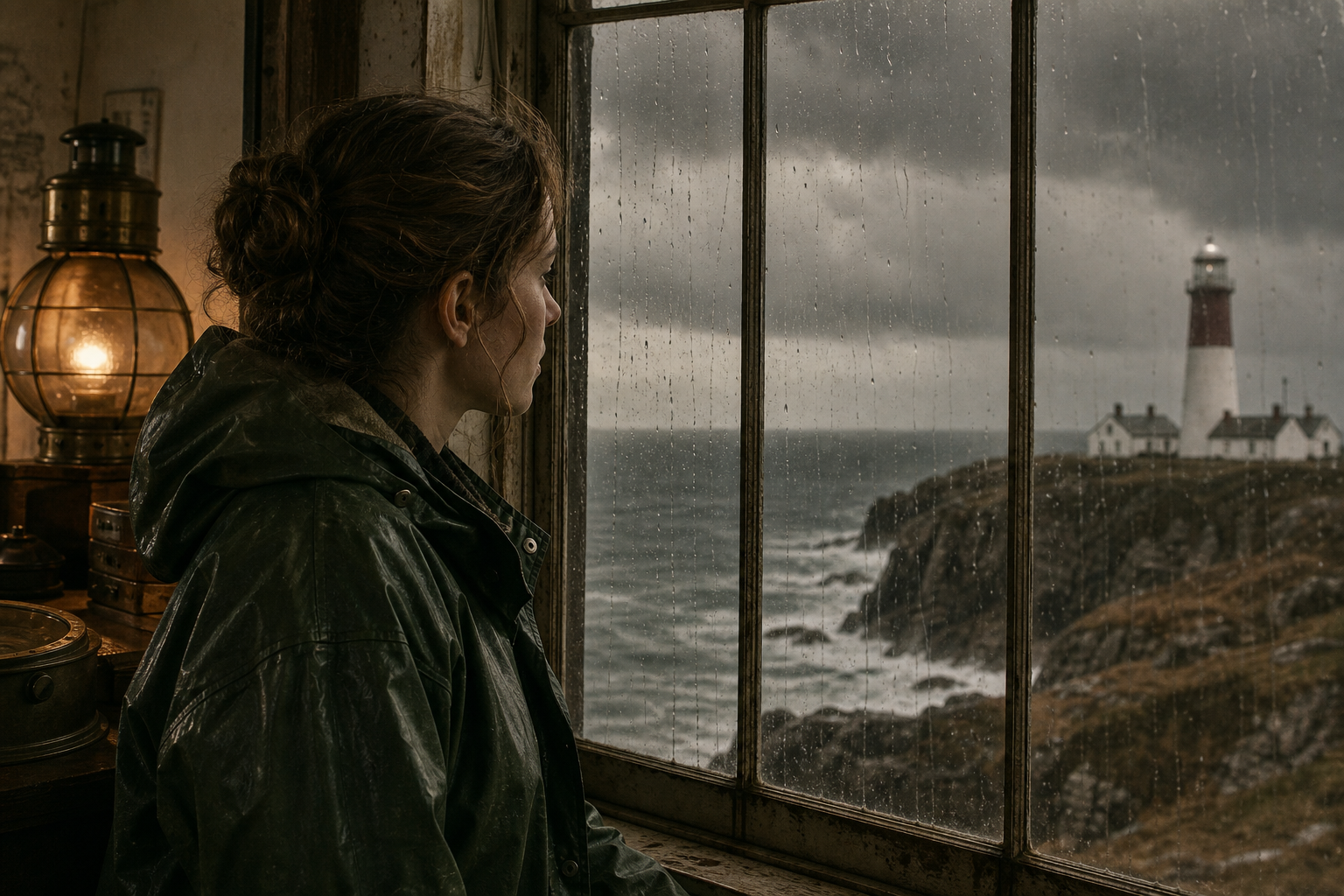
  2. Young female assistant keeper in a dark oilskin coat looking through rain-streaked glass as storm clouds gather above a rocky northern shoreline
    Weather watch

    Reading cloudbreak and tide by hand

    Before wireless forecasts arrived, keepers became local meteorologists. Barometer pressure, wind shifts, and surf noise were compared to earlier entries to warn fishing crews and track approaching squalls.

    The sea tells you first, if you are quiet enough to listen.

    Keeper Anna R., coast notebook, 1926
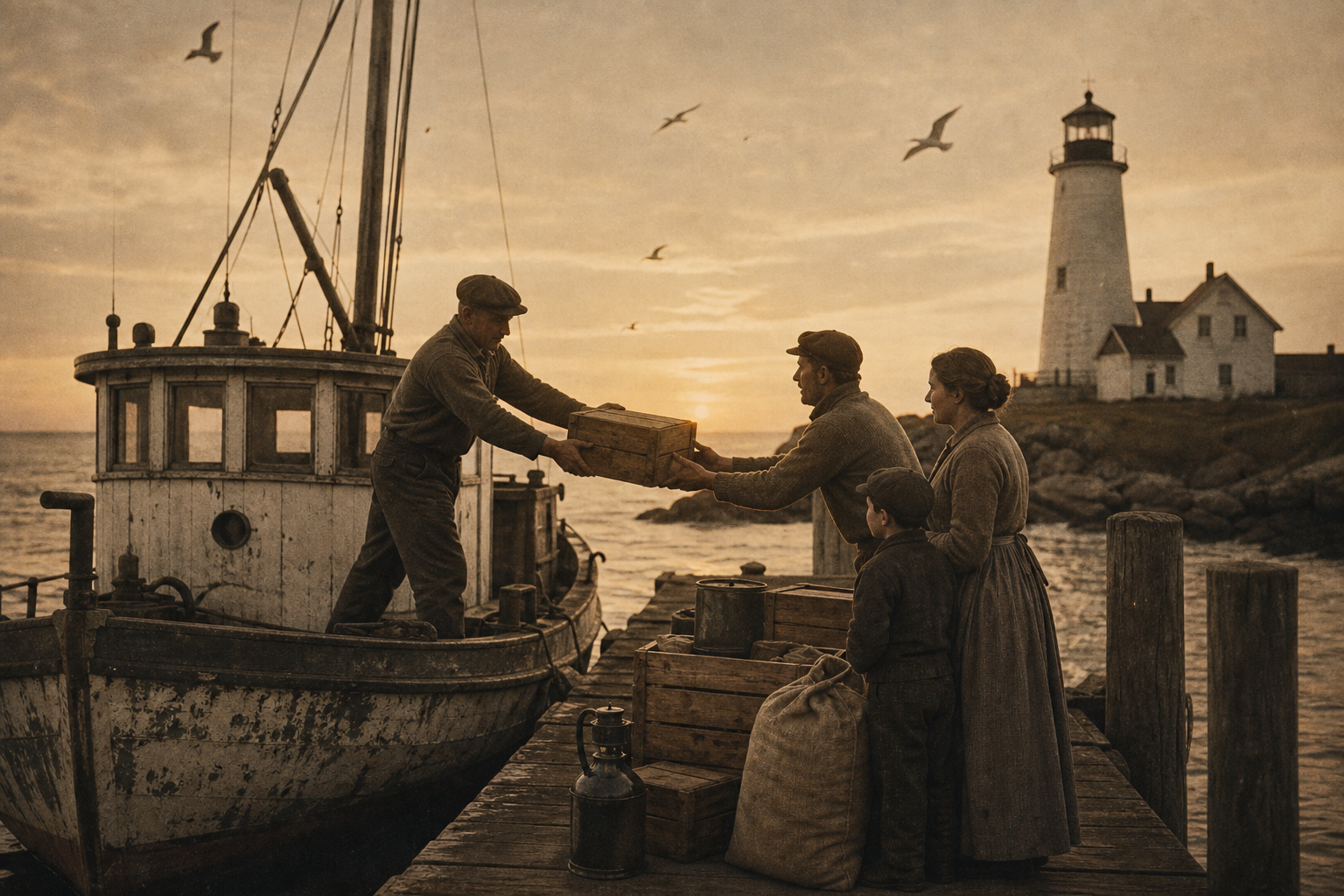
  3. Keeper family on a small wooden dock receiving crates of flour and lamp oil from a weathered supply boat at golden dusk
    Supply day

    Isolation measured in boats and letters

    Resupply landings were social lifelines as much as practical necessity. Newsprint bundles, medicine tins, and handwritten post crossed the jetty alongside spare glass and clockwork parts.

    When the boat rounded the point, even the gulls sounded like company.

    Family letter, Harbor Reach Light, 1908

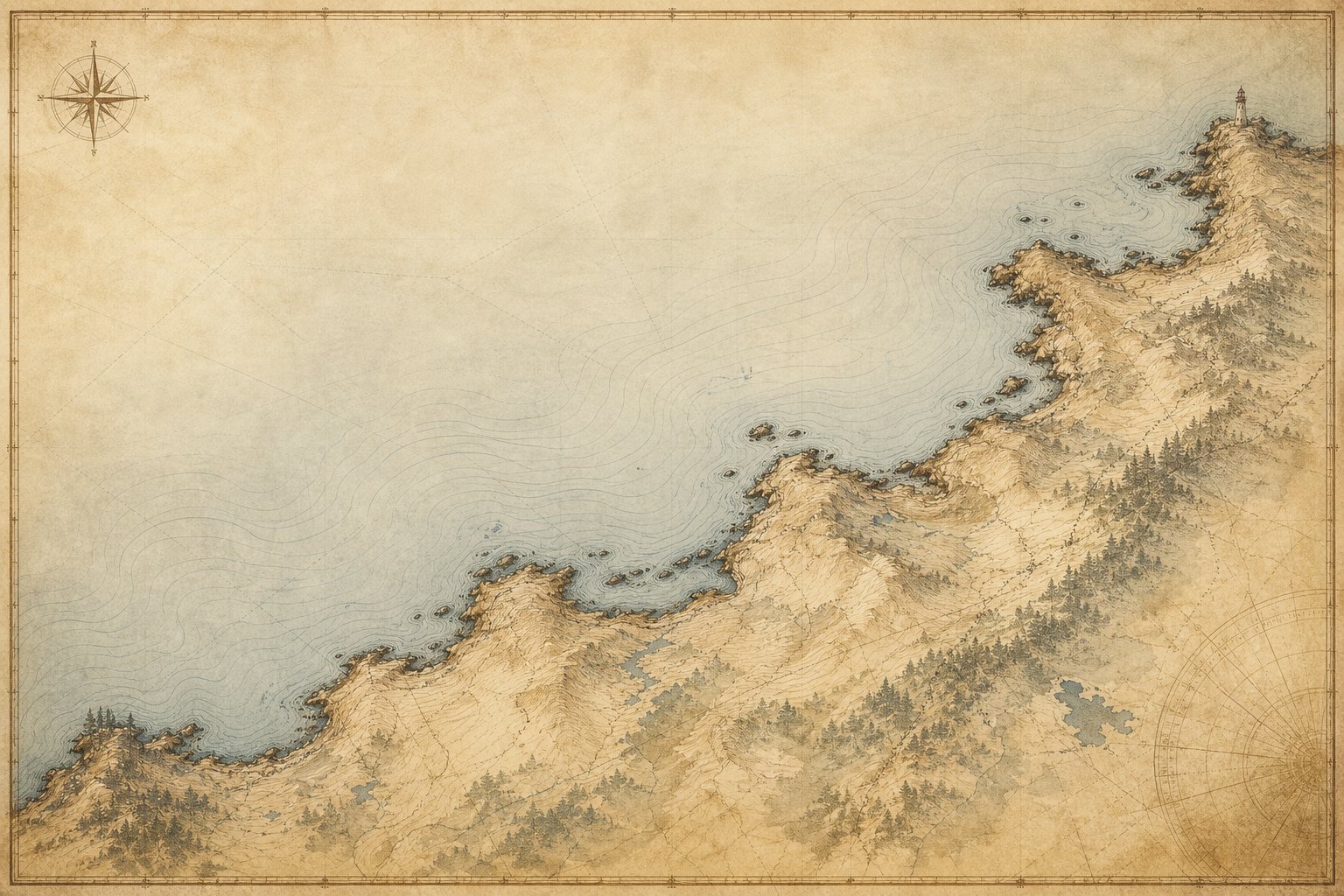
Archive map

Where the preserved beacons trace the northern shoreline

Follow the coast as a connected lighthouse network, with each marker grounding stories, labor, and navigation memory in place.

Illustrated northern coastline chart with preserved lighthouse sites, contour-like sea lines, and traced headlands

N

  • West Head
  • Gull Point
  • Old Breakwater
  • Storm Cape
  • North Reach
  • Preserved tower marker and site name.
  • Dashed bands indicate contour-like sea guidance lines.
  • Coast tracing emphasizes surviving route from west to north.

Visit notes

Practical guidance before you walk the coast

Conditions change quickly along the shoreline—check the map notes and tower details before you go.

Can I access every lighthouse year-round?

No. Some towers sit on seasonal paths, active conservation zones, or weather-affected headlands. Review posted access notes and local authority guidance before setting out.

Are these sites preserved museums or working structures?

Both. A few towers operate as managed heritage sites, while others remain active aids to navigation with restricted interiors. Please follow all barriers, signs, and volunteer instructions.

What weather conditions should I expect on the northern coast?

Wind, mist, and rapid temperature shifts are common, even in mild months. Bring layered clothing, grippy footwear, and check marine forecasts the same day you travel.

Is photography allowed at preserved lighthouse sites?

Usually yes for personal use, but tripods, drone flights, and interior flash can be limited. Keep paths clear, avoid climbing heritage fabric, and respect private residences nearby.

How should I plan a responsible lighthouse day trip?

Start with two to three nearby stops from the archive map, allow extra weather time, carry out all waste, and check seasonal openings for facilities and guided interpretation.